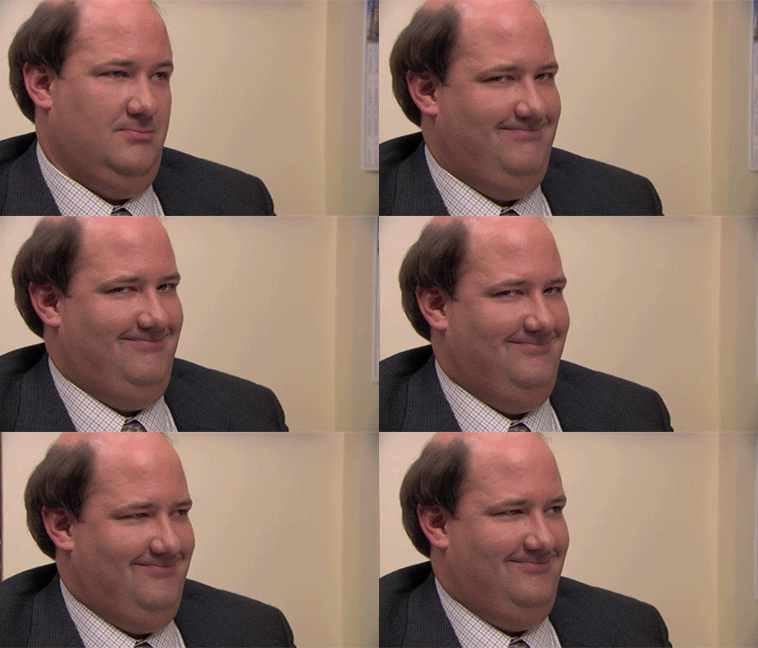
1. Reading through my old blog posts was almost kind of cringy in a way. I don't know if anyone else gets this way, but I hate reading my old writing, I'm always really critical of myself. But it did bring back a lot of memories. One of the stand out moments was when we had to give away free money: I can vividly recall that experience and my feelings on it. First of all, I was not happy about having to give away my own money. And then when I actually did the assignment, it was really awkward. People were either apathetic or confused. There was one lady with a stroller who was really nice but everyone else seemed pretty uncomfortable with the dollar thing. Then it made me remember all the people I've interviewed over the course of this semester. I can't really say I enjoyed that either. Going back to one of my very first blog posts made me remember that game played in class where you had to choose a business or something like that. Also, when I got in contact with the family friend entrepreneur, it made my mom really happy, which I remembered from my first post.
2. Well, I'll probably always remember having to give money to strangers. In a way I think it was also one of my most formative experiences, because I really didn't want to do it but still managed to do it anyway. Having assignments multiple times every week also really forced me to stay on top of myself. I think my most joyous assignment was either the celebrating failure one, because it was honestly kind of therapeutic, or talking to an entrepreneur because it brought me closer to a valued family friend. I'm proud of myself for managing to turn in almost every assignment.
3. Honestly I don't know if I consider myself an entrepreneur. Starting my own business is not something I have ever seriously considered. I am definitely more knowledgable now, but still don't think I could seriously call myself an entrepreneur since all my training and knowledge is hypothetical. At the very least, I have moved closer to having an entrepreneurial mindset.
4. I think students just need to embrace the class for what it is. Yes, the assignments can be tedious and frustrating at times, but overall this is a class anyone can succeed in if you just do the work. Stay on top of things - even do things early if you can - and enjoy the weekly blog posts. Don't stress about this class but you can't let it fall by the way said either. Also, do all the extra credit stuff on YellowDig.
Sunday, April 24, 2016
Week 15 Reading Reflection
1. It's hard to say I was surprised by anything - maybe the fact that they give out such small loans. I thought they only dealt with large quantities. And also the setting was just way different than I was expecting it to be.
2. I was for sure confused by the concept of microfinancing, I had to read it over a couple times to fully understand it.
3. I would ask the author: 1) What made you want to start this business? 2) How long do you think this is sustainable for?
4. I did not disagree with anything the author said.
2. I was for sure confused by the concept of microfinancing, I had to read it over a couple times to fully understand it.
3. I would ask the author: 1) What made you want to start this business? 2) How long do you think this is sustainable for?
4. I did not disagree with anything the author said.
Tuesday, April 19, 2016
Venture Concept No. 2
Opportunity:
My original venture concept idea was more parking around campus (original, I know).
Who has the need: Anyone who frequently needs to be on the UF campus, like students or faculty members.
The nature of the need: It's pretty self explanatory. People need to park somewhere.
Changes in the environment creating this need: I'm not sure exactly what percentage of the United States population owns cars, but they are definitely an everyday part of our lives. Plus, as you move farther away from campus, you pay less in rent, which incentives people to move farther away, and then they have to deal with parking on campus or taking the bus.
How is the marked defined: The market is defined geographically by people in the Gainesville area, specifically young college students who need to park somewhere.
How are customers currently satisfying this need: They're either buying on-campus decals, walking, taking the bus or riding a bike. I don't think there is much brand loyalty when it comes to parking.
How long will the window of opportunity be open: I don't foresee it closing anytime soon, unless UF suddenly unveils a huge new parking lot or every car explodes at the same time.
Innovation:
Like I mentioned above, there is nothing radical about this idea. The only thing I could do that would be a little bit different would be how people pay. Instead of offering semester long passes only, I would consider doing parking by the hour, and closing the parking garage when it's at full capacity until another car leaves. This would have to be done electronically somehow. This way people wouldn't have to pay a lump sum up front and I would probably make more money charging by the hour: maybe 5$ for the first two hours and then an additional two dollar for every hour after that. If someone was on campus three times a week for four hours each time, or something like that, I think it would definitely add up.
Venture concept:
Customers will switch to this product because they need somewhere to park and it's relatively inexpensive. My competitors are other parking lots around Gainesville, but as long as I was one of the closest to campus I think I would be fine. I'm not sure how many employees I would have. At least a few people to run the garage.
This hasn't changed much from the last time I dis this assignment. My most important asset would be a parking garage. There is nothing next for this venture, at least not that I have planned. Next for me would be to sell my business and get a job with a non-profit or something like that.
On my last venture concept, the student feedback was mostly like: "how are you gonna do this though." Someone else mentioned that I should refurbish current parking garages around campus instead of building one from scratch, which would be nice if I was able to do that. There were also questions about my prices compared to my competitors. I think there's a parking garage in downtown that charges about 130$ for a semester, but it's not within walking distance of campus.
Overall, I didn't change much. I changed up the pay scheme, but that was about it. The feedback would have been helpful if I was actually trying to start a business though.
I think it's important we get more ideas like this to actually happen, so things like this don't happen:
My original venture concept idea was more parking around campus (original, I know).
Who has the need: Anyone who frequently needs to be on the UF campus, like students or faculty members.
The nature of the need: It's pretty self explanatory. People need to park somewhere.
Changes in the environment creating this need: I'm not sure exactly what percentage of the United States population owns cars, but they are definitely an everyday part of our lives. Plus, as you move farther away from campus, you pay less in rent, which incentives people to move farther away, and then they have to deal with parking on campus or taking the bus.
How is the marked defined: The market is defined geographically by people in the Gainesville area, specifically young college students who need to park somewhere.
How are customers currently satisfying this need: They're either buying on-campus decals, walking, taking the bus or riding a bike. I don't think there is much brand loyalty when it comes to parking.
How long will the window of opportunity be open: I don't foresee it closing anytime soon, unless UF suddenly unveils a huge new parking lot or every car explodes at the same time.
Innovation:
Like I mentioned above, there is nothing radical about this idea. The only thing I could do that would be a little bit different would be how people pay. Instead of offering semester long passes only, I would consider doing parking by the hour, and closing the parking garage when it's at full capacity until another car leaves. This would have to be done electronically somehow. This way people wouldn't have to pay a lump sum up front and I would probably make more money charging by the hour: maybe 5$ for the first two hours and then an additional two dollar for every hour after that. If someone was on campus three times a week for four hours each time, or something like that, I think it would definitely add up.
Venture concept:
Customers will switch to this product because they need somewhere to park and it's relatively inexpensive. My competitors are other parking lots around Gainesville, but as long as I was one of the closest to campus I think I would be fine. I'm not sure how many employees I would have. At least a few people to run the garage.
This hasn't changed much from the last time I dis this assignment. My most important asset would be a parking garage. There is nothing next for this venture, at least not that I have planned. Next for me would be to sell my business and get a job with a non-profit or something like that.
On my last venture concept, the student feedback was mostly like: "how are you gonna do this though." Someone else mentioned that I should refurbish current parking garages around campus instead of building one from scratch, which would be nice if I was able to do that. There were also questions about my prices compared to my competitors. I think there's a parking garage in downtown that charges about 130$ for a semester, but it's not within walking distance of campus.
Overall, I didn't change much. I changed up the pay scheme, but that was about it. The feedback would have been helpful if I was actually trying to start a business though.
I think it's important we get more ideas like this to actually happen, so things like this don't happen:
Sunday, April 17, 2016
Google Gold
1. I honestly didn't think about getting my blog to show up on google, I just used the recommended labels, tags and titles. I'm not even sure I would want people to find this blog honestly so I'm fine with it.
2. I didn't have any key words beyond like "week 14" or the title. I used the word entrepreneur a lot.
3. I didn't use social media for my blog at all. I mean, I used youtube to upload my videos if that counts. And when I uploaded audio clips to soundcloud some random people liked them, not sure how they found them. That was it though.
4. My most viral post was the celebrating failure one. I have no idea why, it got 8 views. Maybe people wanted to read about someone else's failure.
5. Actually, I did end up checking on Google for "ENT3003 Spring Semester Blog" and my blog was the fourth result. So I guess I did make it to the first page, which is kinda cool.
2. I didn't have any key words beyond like "week 14" or the title. I used the word entrepreneur a lot.
3. I didn't use social media for my blog at all. I mean, I used youtube to upload my videos if that counts. And when I uploaded audio clips to soundcloud some random people liked them, not sure how they found them. That was it though.
4. My most viral post was the celebrating failure one. I have no idea why, it got 8 views. Maybe people wanted to read about someone else's failure.
5. Actually, I did end up checking on Google for "ENT3003 Spring Semester Blog" and my blog was the fourth result. So I guess I did make it to the first page, which is kinda cool.
Week 14 Reading Reflection
1. As someone who is interested in being a manager, I liked all the information on different managing styles, I think that would be really useful to anyone looking to adopt a certain style.
2. I wasn't confused by anything.
3. I would ask what they think the best style is and how to know when to enter a foreign market.
4. I don't disagree with the author on anything.
2. I wasn't confused by anything.
3. I would ask what they think the best style is and how to know when to enter a foreign market.
4. I don't disagree with the author on anything.
Tuesday, April 12, 2016
Very Short Interview, Part 2
I couldn't remember what I originally talked about in that first interview all those months ago, so I went back to my blogpost to get a refresher (if you'd like to reference it as well, click here). Looking back, using the information I've gained both from this class and from my managerial accounting class over the semester, I think Doug gave me some really solid advice. He even provided easy to follow examples. Knowing even more how difficult it can be to start your own business, it just gives me that much more respect for Doug.
I wasn't able to record the interview because Doug lives in Fort Lauderdale, so we conducted our conversation via e-mail. First, I asked him if anything he told me in that first interview had changed. It didn't. If anything, he even more strongly emphasized smart financial planning. Then, since he's had so many different businesses, I asked him which have been the most rewarding and difficult to get off the ground. I figured he would tell me his first business - a donut store he owned for five years - since that was the first time he ever tried, but in fact he told me that since he started it so young, and was still really naive to the whole process, that it was actually one of the easier businesses he ever owned. He told me he almost lucked out in a way with the donut business. The hardest business for him was the stereo business, partly because he owned it the longest and had invested so much in it that seeing it go had been really hard on him. Plus, as he was more of an adult when he began it, he had more responsibilities and awareness of the business world. The last question I asked him was centered around the fact that he's never worked for anyone else a day in his life - I asked him what the best and worst part of being in charge of your own business was. He told me the best part about working for himself was being able to sleep in (lol) and that the worst part was that he couldn't just up and quit his job if things weren't going the way he wanted to. All the responsibility was on himself, 24/7. But he also told me - more seriously - that it made his success all the more rewarding because he knew how hard he worked to achieve it.
I definitely feel more comfortable talking about entrepreneurship now just because I have a little bit more knowledge on the subject. It's never easy to talk about things you know nothing about. Doug didn't mention to me that I seemed any more comfortable on the subject, maybe because the interview was done over e-mail, but I felt more comfortable and at ease.
All in all this was one of my more favorite assignments, partly because it gave me a reason to keep in touch with an old family friend.
I wasn't able to record the interview because Doug lives in Fort Lauderdale, so we conducted our conversation via e-mail. First, I asked him if anything he told me in that first interview had changed. It didn't. If anything, he even more strongly emphasized smart financial planning. Then, since he's had so many different businesses, I asked him which have been the most rewarding and difficult to get off the ground. I figured he would tell me his first business - a donut store he owned for five years - since that was the first time he ever tried, but in fact he told me that since he started it so young, and was still really naive to the whole process, that it was actually one of the easier businesses he ever owned. He told me he almost lucked out in a way with the donut business. The hardest business for him was the stereo business, partly because he owned it the longest and had invested so much in it that seeing it go had been really hard on him. Plus, as he was more of an adult when he began it, he had more responsibilities and awareness of the business world. The last question I asked him was centered around the fact that he's never worked for anyone else a day in his life - I asked him what the best and worst part of being in charge of your own business was. He told me the best part about working for himself was being able to sleep in (lol) and that the worst part was that he couldn't just up and quit his job if things weren't going the way he wanted to. All the responsibility was on himself, 24/7. But he also told me - more seriously - that it made his success all the more rewarding because he knew how hard he worked to achieve it.
I definitely feel more comfortable talking about entrepreneurship now just because I have a little bit more knowledge on the subject. It's never easy to talk about things you know nothing about. Doug didn't mention to me that I seemed any more comfortable on the subject, maybe because the interview was done over e-mail, but I felt more comfortable and at ease.
All in all this was one of my more favorite assignments, partly because it gave me a reason to keep in touch with an old family friend.
Sunday, April 10, 2016
Celebrating Failure
1. To start off, I am not good at math. In fact I'm pretty much awful. For reference, when I took the ACT back in high school, I scored so low on the math section I was deemed "not college ready." For my business degree, I have to take survey of calculus before my junior year. So this semester I signed up for MAC2233. Within one week, I realized I was going to fail. So I dropped the class and picked up the pre-calculus course, MAC1140. I failed the first two exams. I wouldn't say I tried really hard ... because I find it extremely difficult to motivate myself to study for math, but I failed the first two exams. After the first exam (the grade I got was class average) I thought I could pull it together for exam two. Instead I did even worse on that exam and literally cried the entire way home from the exam. Realizing this was going to destroy my GPA, I dropped the class and I'm now enrolled in MAC2233 at Santa Fe (hoping it's a little bit easier there!)
2. I learned a few things from this class (not much of which was math related). First, I learned that while school is important, I shouldn't be stressing myself out so much to the point where I cried for over an hour about a class. I also did learn a few math concepts which I hope will help me in MAC2233 this summer.
3. I'm not a person that handles failure well. Emotionally, I cry when I get frustrated, which means I cry... a lot. And I place a lot of expectation on myself to get good grades since I feel like that is why I'm here at school, and when things don't go according to plan I get really upset. I was really stressed and upset for the first half of the semester. It wasn't until I dropped math that I was even able to enjoy myself again. And it's also embarrassing to be so bad at something even when you're trying. I don't know how much this class has changed my perspective on failure or taking risks. I'm not adverse to risk, I just want to succeed in any risks I do take, that hasn't really changed. If anything I'm just trying to recognize that everyone fails and it's okay to straight up fail sometimes.
Also I wasn't sure what picture to include so here's something I just thought was funny. No matter what you fail in, at least it wasn't this:
2. I learned a few things from this class (not much of which was math related). First, I learned that while school is important, I shouldn't be stressing myself out so much to the point where I cried for over an hour about a class. I also did learn a few math concepts which I hope will help me in MAC2233 this summer.
3. I'm not a person that handles failure well. Emotionally, I cry when I get frustrated, which means I cry... a lot. And I place a lot of expectation on myself to get good grades since I feel like that is why I'm here at school, and when things don't go according to plan I get really upset. I was really stressed and upset for the first half of the semester. It wasn't until I dropped math that I was even able to enjoy myself again. And it's also embarrassing to be so bad at something even when you're trying. I don't know how much this class has changed my perspective on failure or taking risks. I'm not adverse to risk, I just want to succeed in any risks I do take, that hasn't really changed. If anything I'm just trying to recognize that everyone fails and it's okay to straight up fail sometimes.
Also I wasn't sure what picture to include so here's something I just thought was funny. No matter what you fail in, at least it wasn't this:
Week 13 Reading Reflection
1. Since this chapter was mostly just about valuation, I guess the thing I found most surprising was the concept of valuation itself. The different was you can value a company and how potentially subjective it is, when really it's a very important aspect of your business.
2. Some of the smaller concepts confused me because they were kind of glossed over. I'm okay with big picture business ideas but the math intensive concepts take me a bit longer to understand.
3. 1) Do you think the current valuation methods are the best out there? 2) To include more images in his chapters or funny examples like the Facebook story.
4. Once again, I did not disagree about anything.
2. Some of the smaller concepts confused me because they were kind of glossed over. I'm okay with big picture business ideas but the math intensive concepts take me a bit longer to understand.
3. 1) Do you think the current valuation methods are the best out there? 2) To include more images in his chapters or funny examples like the Facebook story.
4. Once again, I did not disagree about anything.
Tuesday, April 5, 2016
My Exit Strategy
1. I would definitely want to sell my company once it's profitable, probably after a couple years.
2. I have chosen this strategy for a couple different reasons. First, this is not an exciting business, I think I would get bored fairly quickly. Also there isn't much room for expansion. I would just let someone else take it over and do with it what they pleased.
3. My exit strategy may have dimmed my initial enthusiasm for the business - if I know I won't be interested in five years, it's hard to put 100% of my effort into it. I don't think it would influence what resources I choose or anything like that though.
2. I have chosen this strategy for a couple different reasons. First, this is not an exciting business, I think I would get bored fairly quickly. Also there isn't much room for expansion. I would just let someone else take it over and do with it what they pleased.
3. My exit strategy may have dimmed my initial enthusiasm for the business - if I know I won't be interested in five years, it's hard to put 100% of my effort into it. I don't think it would influence what resources I choose or anything like that though.
Sunday, April 3, 2016
What's Next
Existing Market:
Step 1. I don't know what's next. Building more parking garages, maybe. Or expanding into other universities.
Step 2. I decided to audio record all my interviews this time because I think it makes people more comfortable.
Interview 1. https://soundcloud.com/taylor-noe-984457218/interview-1
Interview 2. https://soundcloud.com/taylor-noe-984457218/interview-2
Interview 3. https://soundcloud.com/taylor-noe-984457218/interview-3
Some of the highlights included:
- Most people thought I had it covered
- Told me to add more spots
- Said customers might want a larger garage
- Have decal options so students who want a more long term or short term option can choose
- Nobody really said anything about how I could grow
Step 3. Based on the interviews, I don't think this business has much room to grow or expand. I mean it's just a parking garage. Like I initially thought, my only real options are to move into new areas and start expanding that way, but it would still just be more parking garages.
I think there's a reason this business model hasn't already been done in Gainesville and I don't see much room for growth or expansion. For growing in my existing market, there is even less room for expansion. There are barely any empty lots near the UF campus, I would have to start tearing buildings down and replacing them with parking garages in order to expand, which is an expensive and time consuming endeavor. The people I interviewed seemed to agree with me.
New Market:
Step 1. I guess I would target people who don't have any need to be on the University of Florida campus.
Step 2. The only way this could apply to those people is if I just started building parking garages in any populated area, like downtown or places like that.
Step 3. I was downtown eating lunch with friends so I decided to interview people who were downtown and looked older.
Interview 4. https://soundcloud.com/taylor-noe-984457218/interview-4
Interview 5. https://soundcloud.com/taylor-noe-984457218/interview-5 (done on the phone with a friend of a friend who graduated)
Interview 6. https://soundcloud.com/taylor-noe-984457218/interview-6
Some of the highlights included:
- Said there was already parking in downtown
- Maybe add more security
- For people who go downtown a lot, they said there actually wasn't a lot of parking
- Suggested I have a catchy slogan
Step 4. It surprised me that some people thought they had enough parking and some people thought otherwise. In downtown Gainesville we already have a lot of parking, and building a giant parking garage doesn't make sense in an area with low traffic. Yes, everybody drives/parks their car, but this market has long ago been tapped into.
Step 1. I don't know what's next. Building more parking garages, maybe. Or expanding into other universities.
Step 2. I decided to audio record all my interviews this time because I think it makes people more comfortable.
Interview 1. https://soundcloud.com/taylor-noe-984457218/interview-1
Interview 2. https://soundcloud.com/taylor-noe-984457218/interview-2
Interview 3. https://soundcloud.com/taylor-noe-984457218/interview-3
Some of the highlights included:
- Most people thought I had it covered
- Told me to add more spots
- Said customers might want a larger garage
- Have decal options so students who want a more long term or short term option can choose
- Nobody really said anything about how I could grow
Step 3. Based on the interviews, I don't think this business has much room to grow or expand. I mean it's just a parking garage. Like I initially thought, my only real options are to move into new areas and start expanding that way, but it would still just be more parking garages.
I think there's a reason this business model hasn't already been done in Gainesville and I don't see much room for growth or expansion. For growing in my existing market, there is even less room for expansion. There are barely any empty lots near the UF campus, I would have to start tearing buildings down and replacing them with parking garages in order to expand, which is an expensive and time consuming endeavor. The people I interviewed seemed to agree with me.
New Market:
Step 1. I guess I would target people who don't have any need to be on the University of Florida campus.
Step 2. The only way this could apply to those people is if I just started building parking garages in any populated area, like downtown or places like that.
Step 3. I was downtown eating lunch with friends so I decided to interview people who were downtown and looked older.
Interview 4. https://soundcloud.com/taylor-noe-984457218/interview-4
Interview 5. https://soundcloud.com/taylor-noe-984457218/interview-5 (done on the phone with a friend of a friend who graduated)
Interview 6. https://soundcloud.com/taylor-noe-984457218/interview-6
Some of the highlights included:
- Said there was already parking in downtown
- Maybe add more security
- For people who go downtown a lot, they said there actually wasn't a lot of parking
- Suggested I have a catchy slogan
Step 4. It surprised me that some people thought they had enough parking and some people thought otherwise. In downtown Gainesville we already have a lot of parking, and building a giant parking garage doesn't make sense in an area with low traffic. Yes, everybody drives/parks their car, but this market has long ago been tapped into.
Week 12 Reading Reflection
1. What surprised me the most I think was the overall lack of cohesive and organized planning from entrepreneurs in new businesses. Having an organized plan seems like such a great help to me that I can't imagine why anyone would forgo it, or start a legitimate business without some cohesive planning, including backup plans in case something goes wrong.
2. Nothing particularly confused me.
3. My two questions would focus on planning. I would ask the author 1) In most cases wouldn't you say that planning can be really beneficial, it just depends on the person? And 2) Do you think people who want to create a global empire should start in America?
4. I disagreed that business plans should be short. There is nothing wrong with planning things for the long-term as long as you acknowledge flexibility and unpredictability.
2. Nothing particularly confused me.
3. My two questions would focus on planning. I would ask the author 1) In most cases wouldn't you say that planning can be really beneficial, it just depends on the person? And 2) Do you think people who want to create a global empire should start in America?
4. I disagreed that business plans should be short. There is nothing wrong with planning things for the long-term as long as you acknowledge flexibility and unpredictability.
Wednesday, March 30, 2016
Venture Concept No. 1
Opportunity
1. The need of this business comes from the people who have to drive to the University of Florida campus. This need exists because there are not enough parking spots for all the people who come to campus. The market is primarily geographical and relatively limited, although if you wanted to scope out other colleges I'm sure you could find schools with similar parking problems. Right now, customers are satisfying this need either by getting a coveted spot on campus, parking off-campus somewhere far away, or using other means of transpiration to get to school (walk/bus/bike). I don't think people really have brand loyalty when it comes to parking - they just don't want to get a ticket. This is a big opportunity. I think the window of opportunity will be there as long as the University continues to grow without addressing the current parking needs. The main force behind this is actually the University itself -- they are the ones in charge of parking and how many people get decals.
Innovation
This is not a radically innovative idea. People have been building parking lots for decades. The parking lots that I would design would probably be parking garages with some kind of tollbooth or parking attendant to monitor and regulate the garage. My main source of money would be allowing people to park. I would sell semester-long parking passes for 150$ which is less than UF currently charges. I would have to make sure I have enough spots to at least breakeven on my expenses, which would be just rent/property stuff and some employees.
Venture Concept
Customers will use this because they aren't able to use anything else. I don't think it would be hard to get people to use the parking lot. Build it, advertise it, and they will come. My competitors are other off-campus parking but most are really far from the UF campus. I would probably have under ten employees, I don't think it would require that many people.
My most important resource would be a parking lot.
1. The need of this business comes from the people who have to drive to the University of Florida campus. This need exists because there are not enough parking spots for all the people who come to campus. The market is primarily geographical and relatively limited, although if you wanted to scope out other colleges I'm sure you could find schools with similar parking problems. Right now, customers are satisfying this need either by getting a coveted spot on campus, parking off-campus somewhere far away, or using other means of transpiration to get to school (walk/bus/bike). I don't think people really have brand loyalty when it comes to parking - they just don't want to get a ticket. This is a big opportunity. I think the window of opportunity will be there as long as the University continues to grow without addressing the current parking needs. The main force behind this is actually the University itself -- they are the ones in charge of parking and how many people get decals.
Innovation
This is not a radically innovative idea. People have been building parking lots for decades. The parking lots that I would design would probably be parking garages with some kind of tollbooth or parking attendant to monitor and regulate the garage. My main source of money would be allowing people to park. I would sell semester-long parking passes for 150$ which is less than UF currently charges. I would have to make sure I have enough spots to at least breakeven on my expenses, which would be just rent/property stuff and some employees.
Venture Concept
Customers will use this because they aren't able to use anything else. I don't think it would be hard to get people to use the parking lot. Build it, advertise it, and they will come. My competitors are other off-campus parking but most are really far from the UF campus. I would probably have under ten employees, I don't think it would require that many people.
My most important resource would be a parking lot.
Sunday, March 27, 2016
Week 11 Reading Reflection
1. I was surprised by how innovative all these companies are with their business models when you typically hear from people how important is to follow what works. These companies are showing that business is constantly changing and relying on the past won't help you.
2. While I wouldn't say this was confusing intellectually, I don't understand why so few entrepreneurs plan things out more. I get that it's important to have a big-picture, but you can't achieve that big picture if you don't have the small details to get you there.
3. Do you think there are ethical problems with crowd-sourcing business ideas? What is the difference between crowd-sourcing and wooing investors?
4. I didn't disagree about anything really.
2. While I wouldn't say this was confusing intellectually, I don't understand why so few entrepreneurs plan things out more. I get that it's important to have a big-picture, but you can't achieve that big picture if you don't have the small details to get you there.
3. Do you think there are ethical problems with crowd-sourcing business ideas? What is the difference between crowd-sourcing and wooing investors?
4. I didn't disagree about anything really.
Amazon Whisperer
1. My main revenue drivers would be people paying a semester-long pass for parking privileges.
2. I'm not sure what the next product offering would be - people just want to park their car in peace. Maybe I would include a valet service or something like that.
3. This would enhance my current service because it's kind of a step-up - it's a more luxurious option for people who are in a rush or just lazy. I think most people would probably forgo it though.
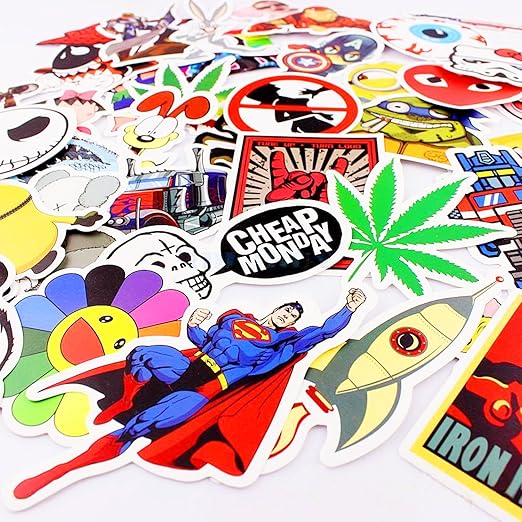
4. I don't know how I'm supposed to find a product on Amazon when this is a service-based company. So I just picked a random product on Amazon - stickers - which I could probably use to denote a car that has a pass. Maybe I would give people a couple different options to choose from. This is the product: Xpassion car stickers decals pack 100 pieces bumper stickers random patterns.
5. The product has 4.5 stars out of 220 reviews. The reviews mention they are fun stickers and a good quality product. Some people said you'd have to check the designs before giving them to children. Someone else said they won't last in the weather.
6. Well I would have to make sure the stickers were really durable and find designs that people would like.
7. This would be a good product to add because you have to be able to tell if someone parking in your garage actually has access or not, stickers would help with that like what UF does.
2. I'm not sure what the next product offering would be - people just want to park their car in peace. Maybe I would include a valet service or something like that.
3. This would enhance my current service because it's kind of a step-up - it's a more luxurious option for people who are in a rush or just lazy. I think most people would probably forgo it though.
4. I don't know how I'm supposed to find a product on Amazon when this is a service-based company. So I just picked a random product on Amazon - stickers - which I could probably use to denote a car that has a pass. Maybe I would give people a couple different options to choose from. This is the product: Xpassion car stickers decals pack 100 pieces bumper stickers random patterns.
5. The product has 4.5 stars out of 220 reviews. The reviews mention they are fun stickers and a good quality product. Some people said you'd have to check the designs before giving them to children. Someone else said they won't last in the weather.
6. Well I would have to make sure the stickers were really durable and find designs that people would like.
7. This would be a good product to add because you have to be able to tell if someone parking in your garage actually has access or not, stickers would help with that like what UF does.
Tuesday, March 22, 2016
My Unfair Advantage
Resources in my venture:
- Knowledge of the Gainesville area, specifically around campus.
- Valuable - yes
- Rare - not in this particular area but rare outside of Florida for sure
- Inimitable - if you spend enough time in the area anyone can learn it but you wouldn't necessarily know where the college kids go
- Non-substitutable - you could always talk to locals but first hand knowledge is the most useful
- Accounting knowledge.
- Valuable - yes
- Rare - no
- Inimitable - yes
- Non-substitutable - a computer program could do the same thing
- Business knowledge.
- Valuable - yes
- Rare - no
- Inimitable - yes
- Non-substitutable - not unless your company is going to be run by computer robots
- Potential start-up money from family.
- Valuable - yes
- Rare - not sure actually
- Inimitable - yes
- Non-substitutable - other cash would work just fine
- A pressing need for my product.
- Valuable - yes
- Rare - yes
- Inimitable - no, you can't manufacture a need that doesn't exist
- Non-subtitutable - yes
- A client base I can easily relate to.
- Valuable - yes
- Rare - no
- Inimitable - no
- Non-substitutable - yes
- Marketing skills towards the right people (millennials).
- Valuable - yes
- Rare - not in today's day and age
- Inimitable - no
- Non-substitutable - yes
- Access to UF Faculty, Staff, and Business Advisers.
- Valuable - depends on how I use it but it could be
- Rare - not in Gainesville
- Inimitable - no
- Non-substitutable - any professional with experience could offer similar advice so no
- Self-disciplined.
- Valuable - yes
- Rare - perhaps on who you're asking
- Inimitable - no
- Non-substitutable - yes, you have to be dedicated to get a business working
- A car.
- Valuable - yes
- Rare - nope
- Inimitable - other public transportation
- Non-substitutable - yes. I need to get around somehow and buses take too long/don't have a bike/can't walk everywhere
After looking at all my current resources, I think my most valuable resource is the undeniable need for the product (parking close to campus). It was the only one that was valuable, rare, not able to be copied by others, and something you can't do without.
Sunday, March 20, 2016
Week 10 Reading Reflection
1. For once, this was material I had actually already had a decent amount of knowledge on beforehand, mostly from my accounting classes. I guess my only real surprise was that it's apparently really important to get paid up-front. I would have thought it didn't particularly matter as long as you got paid.
2. Like I mentioned before, nothing in this chapter really confused me because I have learned a lot of this already.
3. Do you think it's better to build yourself an accounting background before starting or business or hiring out of the business an accounting professional to do the work for you? Also, I would ask about cash flow and loans.
4. There wasn't much opinion-based narratives in this chapter, hard to disagree with facts.
2. Like I mentioned before, nothing in this chapter really confused me because I have learned a lot of this already.
3. Do you think it's better to build yourself an accounting background before starting or business or hiring out of the business an accounting professional to do the work for you? Also, I would ask about cash flow and loans.
4. There wasn't much opinion-based narratives in this chapter, hard to disagree with facts.
Sunday, March 13, 2016
My Secret Sauce
Part One:
1. I think I'm good at keeping a cool-head in stressful situations.
2. I'm assertive - I don't let people walk over me and I'm not afraid to speak my mind.
3. I think I speak eloquently, which usually means people think I'm smarter than I am because of my vast vocabulary (good for initial first impressions).
4. When I get an idea, I want to execute it immediately. I have no patience, so I'm always eager to get something done as soon as possible.
5. I'm capable of looking at things analytically.
Part Two:
I wasn't able to record all of them because a lot of the people who know me best don't live near Gainesville. I called them and transcribed what they said instead.
Mother:
Father:
I don't know if I would really say I get along with everybody but it's nice my dad thinks so. Everything else I more or less agree with.
Michael (Brother):
Veronica (Friend):
Brendan (Friend):
I agree with most of what he said, I like to get involved, especially at school.
Part Three:
For the most part I agree with what the people closest to me had to say about my personality traits. I think one of the main differences is that my parents think the world of me because I'm their kid so they were probably a little more complimentary than in reality. I wouldn't make any corrects to the list, maybe just to add that I'm very organized because I feel that's a good strength of mine.
1. I think I'm good at keeping a cool-head in stressful situations.
2. I'm assertive - I don't let people walk over me and I'm not afraid to speak my mind.
3. I think I speak eloquently, which usually means people think I'm smarter than I am because of my vast vocabulary (good for initial first impressions).
4. When I get an idea, I want to execute it immediately. I have no patience, so I'm always eager to get something done as soon as possible.
5. I'm capable of looking at things analytically.
Part Two:
I wasn't able to record all of them because a lot of the people who know me best don't live near Gainesville. I called them and transcribed what they said instead.
Mother:
- "Articulate and well-spoken because you read a lot."
- "Very good sensibility - common sense, one of your strongest traits."
- "Objective not emotional."
- "See things from different people's perspectives."
- "Quick-reader so you can read things and understand it quickly."
- "Have to be able to understand every perspective in business, which you do. If you can't do that you won't be successful in business."
My mom included a lot of the same things I did - in fact, the first thing she mentioned was my vocabulary. Plus, since she's my mother, she probably could have talked for 20 minutes about all my great traits, I have to take some of this with a grain of salt although I tend to agree with most of it.
Father:
- "Very punctual - always on time, never late."
- "Team player, gets along with everybody."
- "Show leadership skills in a work environment - good leader/trainer."
- "Good at research."
- "Great customer service - diplomatic, don't let rude people get to you."
I don't know if I would really say I get along with everybody but it's nice my dad thinks so. Everything else I more or less agree with.
Michael (Brother):
- "Hard worker."
- "Doesn't give up until job is done."
Veronica (Friend):
- "Always has an opinion on things, very decisive."
- "Really organized."
She was busy so I didn't have a lot of time to talk but I agree with what she wrote.
Brendan (Friend):
Part Three:
For the most part I agree with what the people closest to me had to say about my personality traits. I think one of the main differences is that my parents think the world of me because I'm their kid so they were probably a little more complimentary than in reality. I wouldn't make any corrects to the list, maybe just to add that I'm very organized because I feel that's a good strength of mine.
Week 9 Reading Reflection
1. One of the things that surprised me was the area on entrepreneurship and marketing. I know the book listed some reasons why people don't do marketing research before going forth in their business, but to me it's more important that you know you have a viable business. It may be costly up-front but it could save you tons of time and money down the road.
2. Going off the first part, I was confused that many entrepreneurs do not do marketing research. But, I also don't know a lot about marketing research in general, or how people go about conducting it, so that was confusing as well.
3. Does he think the cost of pre-business research is more beneficial or harmful to most new companies? Also, how much research is considered enough, quantitatively and qualitatively.
4. Like I've said before, it's hard to disagree with someone when they're so knowledgeable about a topic and you aren't. From what I read, everything seemed pretty accurate to me.
2. Going off the first part, I was confused that many entrepreneurs do not do marketing research. But, I also don't know a lot about marketing research in general, or how people go about conducting it, so that was confusing as well.
3. Does he think the cost of pre-business research is more beneficial or harmful to most new companies? Also, how much research is considered enough, quantitatively and qualitatively.
4. Like I've said before, it's hard to disagree with someone when they're so knowledgeable about a topic and you aren't. From what I read, everything seemed pretty accurate to me.
Tuesday, March 8, 2016
Idea Napkin No. 2
1. My name is Taylor Noe, I'm a business student interested in international business management and law. I have a lot of customer service experience and exposure to office settings. I consider myself professional, competent, and credible. If I were to start this business, I think it would have to become a huge part of my life -- running a business is more than just a full-time job I think it becomes your lifestyle. As someone mentioned in the feedback, this venture could prove potentially very costly, so money management is an important asset to have.
2. I am offering to customers the opportunity they should have had since Day 1 -- guaranteed parking close to campus so they can attend classes, jobs, and after school functions without constantly stressing about getting a 30$ parking ticket. These parking garages will be within half a mile of campus and will only be sold to enough cars so that a space is available for everybody who purchases a decal. With this, you no longer have to worry about parking tickets on campus. In this hypothetical world, I would look into buying the empty lot behind midtown where there is currently plans on building an apartment building. Or across the street near the post office where there is an empty grass lot. Gainesville doesn't have very many empty lots anymore, which makes this hypothetical business perhaps a difficult and expensive one.
3. I am offering this to anyone who regularly drives to campus, whether it be faculty, students, or employees. Of course anyone is able to purchase a decal, but I think mainly off-campus students would be the target demographic. Someone in the feedback mentioned last time they were an online student, which I didn't even take into account the first time. Unless they live in Gainesville, online students probably wouldn't have much of a need for this business venture.
4. Transportation is not an option. People have to park. People have to get to campus. Customers will want my product because it makes their lives easier, and there is absolutely a demand for parking near the UF campus. I will charge around the same amount per semester as UF, except my parking lots will actually be available for people who buy decals.
5. I believe one of my greatest competencies is that I am a quick-thinker and problem solver. After years of customer service, I'm also able to remain calm in a stressful situation. In my product I offer close to campus parking with a guarantee you'll be able to park, which is more than UF can say right now.
I think the biggest weak spot in this business is actually the most vital part of it - acquiring the land needed to build parking. Like someone mentioned in the feedback, if I actually wanted to move forward with this, I would probably have to tear a lot down and re-build it. Or, I could acquire a current lot. There is a parking garage in midtown near the pasta place - I could potentially buy that and re-purpose it for UF students. Other than that I think there is definitely a demand, it's just a matter of getting the product.
Feedback Memo:
1. Not all students at UF would need this service - like online and international students.
2. I should consider tearing a current building down - but that may be costly.
3. There is new technology to help make running a parking garage cheaper, like decals that open garage doors.
4. The demand for parking is there.
5. Biggest question is location.
I incorporated this feedback into my napkin idea just by using the things people said to try and expand upon parts of the business.
2. I am offering to customers the opportunity they should have had since Day 1 -- guaranteed parking close to campus so they can attend classes, jobs, and after school functions without constantly stressing about getting a 30$ parking ticket. These parking garages will be within half a mile of campus and will only be sold to enough cars so that a space is available for everybody who purchases a decal. With this, you no longer have to worry about parking tickets on campus. In this hypothetical world, I would look into buying the empty lot behind midtown where there is currently plans on building an apartment building. Or across the street near the post office where there is an empty grass lot. Gainesville doesn't have very many empty lots anymore, which makes this hypothetical business perhaps a difficult and expensive one.
3. I am offering this to anyone who regularly drives to campus, whether it be faculty, students, or employees. Of course anyone is able to purchase a decal, but I think mainly off-campus students would be the target demographic. Someone in the feedback mentioned last time they were an online student, which I didn't even take into account the first time. Unless they live in Gainesville, online students probably wouldn't have much of a need for this business venture.
4. Transportation is not an option. People have to park. People have to get to campus. Customers will want my product because it makes their lives easier, and there is absolutely a demand for parking near the UF campus. I will charge around the same amount per semester as UF, except my parking lots will actually be available for people who buy decals.
5. I believe one of my greatest competencies is that I am a quick-thinker and problem solver. After years of customer service, I'm also able to remain calm in a stressful situation. In my product I offer close to campus parking with a guarantee you'll be able to park, which is more than UF can say right now.
I think the biggest weak spot in this business is actually the most vital part of it - acquiring the land needed to build parking. Like someone mentioned in the feedback, if I actually wanted to move forward with this, I would probably have to tear a lot down and re-build it. Or, I could acquire a current lot. There is a parking garage in midtown near the pasta place - I could potentially buy that and re-purpose it for UF students. Other than that I think there is definitely a demand, it's just a matter of getting the product.
Feedback Memo:
1. Not all students at UF would need this service - like online and international students.
2. I should consider tearing a current building down - but that may be costly.
3. There is new technology to help make running a parking garage cheaper, like decals that open garage doors.
4. The demand for parking is there.
5. Biggest question is location.
I incorporated this feedback into my napkin idea just by using the things people said to try and expand upon parts of the business.
Monday, February 22, 2016
Week 8 Reading Reflection
Chapter 8 - Sources of Capital for Entrepreneurial Ventures
1. I don't know if this really counts for a surprise, but I was surprised to see that the things I learned in financial accounting actually made this chapter easier to understand. I actually knew about debt vs. equity on some level. I did think the section on how many banks are in the US was a little shocking - I thought it would be lower.
2. I was a little confused that manufactures would long-term finance equipment - what do they get out of this? Is it structured just like a bank loan? I also didn't fully understand venture capitalist stuff.
3. 1. What are some examples of businesses going public that went badly? 2. Do you think "angel" financing or typical venture capitalism is better?
4. I didn't disagree about anything.
1. I don't know if this really counts for a surprise, but I was surprised to see that the things I learned in financial accounting actually made this chapter easier to understand. I actually knew about debt vs. equity on some level. I did think the section on how many banks are in the US was a little shocking - I thought it would be lower.
2. I was a little confused that manufactures would long-term finance equipment - what do they get out of this? Is it structured just like a bank loan? I also didn't fully understand venture capitalist stuff.
3. 1. What are some examples of businesses going public that went badly? 2. Do you think "angel" financing or typical venture capitalism is better?
4. I didn't disagree about anything.
Half-way Reflection
I actually decided to take this class on the recommendation of several friends who had taken it before me. I think peer evaluations and recommendations are some of the most powerful decision makers we have. So, to anyone considering taking this class, here are my thoughts on ENT3003:
1. Some of the behaviors I've developed and used are having to almost obsessively check for assignments that are due. Even though this class is easy content-wise, there are assignments due all the time, and it's too easy to just forget about them (which I've already done once!) I definitely have to stay on top of things for this class. I've also had to do some things I really didn't want to - mainly recording strangers off the streets. I don't consider myself a shy person, but that can still be daunting. After doing it several times though, I feel more confident in my abilities to randomly talk to strangers.
2. I know I've waited until the last minute to do customer interviews before, and felt like giving up and just not doing it. In the end I always would do the assignment, both because that's just how I am with school and because I wanted to be able to get it done. I just kind of reminded myself it wasn't a big deal and I would be happier when it was done. Working against a really close deadline kind of stressed me out but it was fine in the end.
3. Three tips:
1. Set reminders for your ENT3003 assignments, but also include what the assignment asks of you so you know how much time you will need to get it done.
2. Be confident in talking to strangers.
3. Start watching the lectures early and don't skip, it becomes too easy to forget about them in your hectic routine.
Overall, I highly recommend this class to any business major, even if you aren't interested in becoming an entrepreneur. It's not too hard, you learn some valuable tips, and if you do your work you know you can get a good grade.
You got this!
1. Some of the behaviors I've developed and used are having to almost obsessively check for assignments that are due. Even though this class is easy content-wise, there are assignments due all the time, and it's too easy to just forget about them (which I've already done once!) I definitely have to stay on top of things for this class. I've also had to do some things I really didn't want to - mainly recording strangers off the streets. I don't consider myself a shy person, but that can still be daunting. After doing it several times though, I feel more confident in my abilities to randomly talk to strangers.
2. I know I've waited until the last minute to do customer interviews before, and felt like giving up and just not doing it. In the end I always would do the assignment, both because that's just how I am with school and because I wanted to be able to get it done. I just kind of reminded myself it wasn't a big deal and I would be happier when it was done. Working against a really close deadline kind of stressed me out but it was fine in the end.
3. Three tips:
1. Set reminders for your ENT3003 assignments, but also include what the assignment asks of you so you know how much time you will need to get it done.
2. Be confident in talking to strangers.
3. Start watching the lectures early and don't skip, it becomes too easy to forget about them in your hectic routine.
Overall, I highly recommend this class to any business major, even if you aren't interested in becoming an entrepreneur. It's not too hard, you learn some valuable tips, and if you do your work you know you can get a good grade.
You got this!
Sunday, February 21, 2016
Free Money
1. I decided to just walk around campus, since I'm familiar with the area and there are always people.
2. I approached anyone who was walking with headphones or who looked otherwise occupied.
3. To get the conversation started, I'm just going to say - "would you like a dollar?"
4. My plan for the conversation is just to get people to accept the dollar.
5. I think I will be able to give away all five dollars.
2. I approached anyone who was walking with headphones or who looked otherwise occupied.
3. To get the conversation started, I'm just going to say - "would you like a dollar?"
4. My plan for the conversation is just to get people to accept the dollar.
5. I think I will be able to give away all five dollars.
Going into this, I wasn't sure what to expect. I figured everyone would just take the dollar. The first person I asked was confused, but said yes. Then, the next person said she didn't want it. I have no idea why. Everyone who said yes seemed confused. I had one long conversation with a woman biking with her child - she assumed it was a "pay it forward" thing. I didn't really get the point of this assignment, and I honestly didn't really like it because it's not like I have five dollars just sitting around to give away. But I think it was easier than interviewing people because more people want free money than to give feedback on some business idea.
Week 7 Reading Reflection
1. Initially, I was kind of surprised that companies had evolved past basic demographics for marketing. I don't know why it surprised me, it makes a lot of sense to use more useful information than stereotypical demographical data, but I think it's just because I've never really thought about it before.
2. At times, the article used words or theories that I wasn't really familiar with. The chart was also a little confusing too. But overall I was able to understand the article's points.
3. 1. Why do you think non-demographic segmentation has stopped working? 2. Why do companies continue to use methods that don't work?
4. I don't know enough about this topic to really disagree with the author on anything, he seemed knowledgable.
2. At times, the article used words or theories that I wasn't really familiar with. The chart was also a little confusing too. But overall I was able to understand the article's points.
3. 1. Why do you think non-demographic segmentation has stopped working? 2. Why do companies continue to use methods that don't work?
4. I don't know enough about this topic to really disagree with the author on anything, he seemed knowledgable.
Sunday, February 14, 2016
Customer Interviews No. 3
1. For my interview strategy, I just had strangers read my note-card, while I answered any questions they had and then ask for feedback. I mainly wanted to know if this was applicable to them or not, and if it was, would they purchase a decal.
2. Customer interviews:
3. During these interviews, I honestly just felt relieved to be done interviewing customers. It's not something I really enjoy. I found that the biggest factor was the price of the decals - one customer said it was reasonable while another considered it steep. Another customer didn't even have a car so it wasn't relevant to her. I'm not certain on what price I should stick with - I also thought the idea to issue decals based on credits or standing interesting.
2. Customer interviews:
3. During these interviews, I honestly just felt relieved to be done interviewing customers. It's not something I really enjoy. I found that the biggest factor was the price of the decals - one customer said it was reasonable while another considered it steep. Another customer didn't even have a car so it wasn't relevant to her. I'm not certain on what price I should stick with - I also thought the idea to issue decals based on credits or standing interesting.
Week 6 Reading Reflection
1. The biggest surprise to me was really just the whole article - I really knew nothing about the five competitive forces before reading this. I think it's interesting what he believes them to be - competition is based on bargaining power of customers, threat to the product, bargaining power of suppliers and threat of new products. I was surprised but when you think about it, it actually makes sense.
2. I was a little confused by how putting a ceiling on the price limits market competition and profitability.
3. 1. How to identify your companies strengths and weaknesses in the context of the five forces? 2. Taking the offensive in strategies vs. the defensive.
4. I didn't disagree about anything.
2. I was a little confused by how putting a ceiling on the price limits market competition and profitability.
3. 1. How to identify your companies strengths and weaknesses in the context of the five forces? 2. Taking the offensive in strategies vs. the defensive.
4. I didn't disagree about anything.
Thursday, February 11, 2016
Idea Napkin No. 1
1. My name is Taylor Noe, I'm a business student interested in international business management and law. I have a lot of customer service experience and exposure to office settings. I consider myself professional, competent, and credible. If I were to start this business, I think it would have to become a huge part of my life -- running a business is more than just a full-time job I think it becomes your lifestyle. Although I do not have dreams of starting my own business, I would like to one day be part of the upper management chain for a globally recognized business.
2. I am offering to customers the opportunity they should have had since Day 1 -- guaranteed parking close to campus so they can attend classes, jobs, and after school functions without constantly stressing about getting a 30$ parking ticket. These parking garages will be within half a mile of campus and will only be sold to enough cars so that a space is available for everybody who purchases a decal. With this, you no longer have to worry about parking tickets on campus.
3. I am offering this to anyone who regularly drives to campus, whether it be faculty, students, or employees. Of course anyone is able to purchase a decal, but I think mainly off-campus students would be the target demographic.
4. Transportation is not an option. People have to park. People have to get to campus. Customers will want my product because it makes their lives easier, and there is absolutely a demand for parking near the UF campus. I will charge around the same amount per semester as UF, except my parking lots will actually be available for people who buy decals.
5. I believe one of my greatest competencies is that I am a quick-thinker and problem solver. After years of customer service, I'm also able to remain calm in a stressful situation. In my product I offer close to campus parking with a guarantee you'll be able to park, which is more than UF can say right now.
2. I am offering to customers the opportunity they should have had since Day 1 -- guaranteed parking close to campus so they can attend classes, jobs, and after school functions without constantly stressing about getting a 30$ parking ticket. These parking garages will be within half a mile of campus and will only be sold to enough cars so that a space is available for everybody who purchases a decal. With this, you no longer have to worry about parking tickets on campus.
3. I am offering this to anyone who regularly drives to campus, whether it be faculty, students, or employees. Of course anyone is able to purchase a decal, but I think mainly off-campus students would be the target demographic.
4. Transportation is not an option. People have to park. People have to get to campus. Customers will want my product because it makes their lives easier, and there is absolutely a demand for parking near the UF campus. I will charge around the same amount per semester as UF, except my parking lots will actually be available for people who buy decals.
5. I believe one of my greatest competencies is that I am a quick-thinker and problem solver. After years of customer service, I'm also able to remain calm in a stressful situation. In my product I offer close to campus parking with a guarantee you'll be able to park, which is more than UF can say right now.
Sunday, February 7, 2016
Week 5 Reading Reflection
1. That there are 1,500 new business every day in this country - that seems crazy high. It also makes me believe that a lot of these must be duplicate businesses. I wonder how long they last for on average, and who the primary demographic is that are constantly starting new businesses.
2. How did the author categorize each business into one of the three ventures for growth of sales? I was a little bit confused on how those differed from one another.
3. 1. What is the #1 reason business owners report going out of business? 2. How can you plan and avoid that reason?
4. I didn't disagree with anything the author said in this chapter.
2. How did the author categorize each business into one of the three ventures for growth of sales? I was a little bit confused on how those differed from one another.
3. 1. What is the #1 reason business owners report going out of business? 2. How can you plan and avoid that reason?
4. I didn't disagree with anything the author said in this chapter.
Interviewing Customers #2
1. I still like my original plan of building parking lots, but I need more concrete ideas to tell people.
2. I talked to the same people - college students - but tried to find people who park on campus or have a car at school with them.
3. I made my interview questions more specific this time.
4.
5. I learned that people want guaranteed parking but don't want to pay that much for it.
6. Interviewing customers can be daunting, especially if you don't have your questions memorized and you feel like you have to instantly ask another question after they answer the first one. Also, if they said no the question of owning a car, it was hard to ask the other questions because they weren't applicable.
2. I talked to the same people - college students - but tried to find people who park on campus or have a car at school with them.
3. I made my interview questions more specific this time.
4.
5. I learned that people want guaranteed parking but don't want to pay that much for it.
6. Interviewing customers can be daunting, especially if you don't have your questions memorized and you feel like you have to instantly ask another question after they answer the first one. Also, if they said no the question of owning a car, it was hard to ask the other questions because they weren't applicable.
Wednesday, February 3, 2016
Elevator Pitch #1
Tired of driving around for 30 minutes desperately hoping for a parking spot to miraculously appear? Sick of spending 140$ on a decal that promises you nothing? Gainesville Parking wants to help you do something that the University has clearly failed on - parking your car by building more parking lots around the outskirts of campus.
Sunday, January 31, 2016
Customer Interviews #1
1. Find an opportunity:
My opportunity came from a conversation I had with a co-worker of mine. As we discussed the increase in construction and new buildings around campus, she made a good point - all these buildings are being built on lots that used to house UF parking. With more buildings and even less parking than before, I believe there is an opportunity here.
2. Figure out who may have the unmet need:
Just from my experience in talking to people who go to UF, everybody could use more parking, including faculty members. I think you would be hard pressed to find someone with a UF parking decal who was satisfied with the current amount of parking spots available on campus.
3. Come up with a list of questions: 1. Do you live on campus? 2. Have you ever owned a parking decal? 3. Do you have any experiences with parking on campus? 4. Would you recommend parking on campus to someone else? 5. How much would you pay for a guranteed spot on campus?
6. Tell us what you learned about interviewing customers: I'm not a particularly shy person, but I found it both easier and harder to talk to strangers while recording them. I found myself constantly looking at them through the video on my phone rather than at their face, which ended up feeling a little awkward. Also, people were a lot more cool with me recording them than I thought they would be, even at night. I also learned that people love to talk about parking.
My opportunity came from a conversation I had with a co-worker of mine. As we discussed the increase in construction and new buildings around campus, she made a good point - all these buildings are being built on lots that used to house UF parking. With more buildings and even less parking than before, I believe there is an opportunity here.
2. Figure out who may have the unmet need:
Just from my experience in talking to people who go to UF, everybody could use more parking, including faculty members. I think you would be hard pressed to find someone with a UF parking decal who was satisfied with the current amount of parking spots available on campus.
3. Come up with a list of questions: 1. Do you live on campus? 2. Have you ever owned a parking decal? 3. Do you have any experiences with parking on campus? 4. Would you recommend parking on campus to someone else? 5. How much would you pay for a guranteed spot on campus?
4. Go talk to customers:
5. Tell us what you learned about the opportunity: I learned a few things from talking about this with other students. Even the students who didn't park on campus had experiences or strong opinions formed about parking on campus. I also learned the price someone would pay for a guaranteed spot really depended on their direct involvement with on-campus parking - someone who had never used it before was willing to pay less than someone who had. Also, even though a lot of people hate the parking system, they would still recommend it to a friend because they believe it's a necessity if you own a car. I think there is for sure a need for more parking.
Week 4 Reading Reflection
1. I was surprised by one of the quotes listed: That adults only use 2 - 10% of their creative potential. How did they measure this information? It seems like it would be hard to quantify, but if true, that is a maddeningly low percentage.
2. The way the author described incongruities confused me. His definition made sense, but his example about the guy who created FedEx was a little confusing - he was right about needing overnight shipping at the time, or wrong? It was unclear.
3. a. How they got the information on the 2 - 10% statistic
b. Which of the four types of innovation models mentioned are likely to turn out successful businesses?
4. I disagreed with his assessment on the right and left brain hemisphere. While they are certainly different, I've read scientific studies that disprove the notion that people are more inclined to use one over the other, and in fact to use one you need the other.
2. The way the author described incongruities confused me. His definition made sense, but his example about the guy who created FedEx was a little confusing - he was right about needing overnight shipping at the time, or wrong? It was unclear.
3. a. How they got the information on the 2 - 10% statistic
b. Which of the four types of innovation models mentioned are likely to turn out successful businesses?
4. I disagreed with his assessment on the right and left brain hemisphere. While they are certainly different, I've read scientific studies that disprove the notion that people are more inclined to use one over the other, and in fact to use one you need the other.
Sunday, January 24, 2016
Top 5 World Problems
Most serious:
1. Global warming
2. Corruption in the government
3. World hunger
4. Global terrorism
5. Wealth disparity
Most implementable solution:
1. Corruption in the government
2. World hunger
3. Wealth disparity
4. Global warming
5. Global terrorism
For my most serious list, I had a hard time narrowing it down to the top five, because I feel like everything on that list is a huge problem. I picked global warming first because that's something that can't really be fixed on a casual basis, it has wide-reaching implications and it affects everybody. Then I picked corruption in the government because I feel like a lot of the problems underneath it could be solved if we had less corruption in the government, like the distribution of food and wealth. I put global terrorism above wealth disparity just because while it's not necessarily any more serious on a smaller scale, it has the possibility to affect more people on a wider scale.
Then, for the most implementable solutions, I wasn't sure which to pick because in some cases they all seem so far-fetched to me. Like I said above, I put corruption in the government first because I think if we repealed Citizens United Act we would see an instant decrease, which would allow the other problems to see perhaps a real solution. I picked world hunger second because in theory we have enough food to feed the world - it's just a matter of distribution. The same is true with wealth disparity. I debated between global warming and terrorism for four and five, and ended up picking global warming fourth because I think we have the policy ideas in place, just no way of feasibly implementing them with the way the government is currently running. Global terrorism is last because I don't think there's one easy solution to that problem.
1. Global warming
2. Corruption in the government
3. World hunger
4. Global terrorism
5. Wealth disparity
Most implementable solution:
1. Corruption in the government
2. World hunger
3. Wealth disparity
4. Global warming
5. Global terrorism
For my most serious list, I had a hard time narrowing it down to the top five, because I feel like everything on that list is a huge problem. I picked global warming first because that's something that can't really be fixed on a casual basis, it has wide-reaching implications and it affects everybody. Then I picked corruption in the government because I feel like a lot of the problems underneath it could be solved if we had less corruption in the government, like the distribution of food and wealth. I put global terrorism above wealth disparity just because while it's not necessarily any more serious on a smaller scale, it has the possibility to affect more people on a wider scale.
Then, for the most implementable solutions, I wasn't sure which to pick because in some cases they all seem so far-fetched to me. Like I said above, I put corruption in the government first because I think if we repealed Citizens United Act we would see an instant decrease, which would allow the other problems to see perhaps a real solution. I picked world hunger second because in theory we have enough food to feed the world - it's just a matter of distribution. The same is true with wealth disparity. I debated between global warming and terrorism for four and five, and ended up picking global warming fourth because I think we have the policy ideas in place, just no way of feasibly implementing them with the way the government is currently running. Global terrorism is last because I don't think there's one easy solution to that problem.
Week 3 Reading Reflection
1. The section on entrepreneurial stress. While of course I knew that entrepreneur's would experience stress like everybody else does, I think it was interesting they have a specific set of stressers attributed to their field. I also didn't know they were classified as type A personalities.
2. I didn't think anything was that confusing.
3. I would ask about the validity of the study done on exercising rigorously, and I would ask how they measured the entrepreneurial ego.
4. I didn't necessarily disagree with this, but I would like to know more about the study they mentioned with the correlation between exercising and success, and if they accounted for things like spuriousness.
2. I didn't think anything was that confusing.
3. I would ask about the validity of the study done on exercising rigorously, and I would ask how they measured the entrepreneurial ego.
4. I didn't necessarily disagree with this, but I would like to know more about the study they mentioned with the correlation between exercising and success, and if they accounted for things like spuriousness.
Identifying Local Opportunities
Problem #1
1. Florida leads U.S. in new HIV cases after years of cuts in public health.
2. Link
3. While the rates of HIV decline across the country, Florida's rates of new HIV cases continue to increase, specifically in the Miami Dade area. Many believe this is due to the past four years of personnel health cuts that have shrunk the budgets of local health departments. Others think money is not the problem, but the silence on the subject from the state's top health officer, Dr. Armstrong. Still others believe there is not an increase at all, but that the increase in cases can be attributed to increased testing.
4. The problem is the increase in new cases of HIV/Aids.
5. This problem is primarily affecting the Miami Dade and Broward areas of Florida, specifically people who have unprotected sex or do not know enough about how to have safe sex.
Problem #2
1. Women cops hope to arrest sexist behavior in GPD.
2. Link
3. GPD Captain Brian Helmerson is retiring after accusations of sexual harassment and creating a hostile work environment. Some of the accusations include placing the cellphone of a female officer between his legs and saying "come and get it," as well as making comments about the bodies of female officers. However the concerns of these women went beyond the actions of one crude captain, but of a culture that tolerates treating female and male cops, and insubordinates, in a demeaning way.
4. The problem is the police culture that enables treating officers differently based on gender or rank, as well as making demeaning and inappropriate comments to colleagues.
5. This problem is primarily affecting the female lieutenants at GPD, but also affects male officers as well.
Problem #3
1. Are prescription medicines the new oil?
2. Link
3. Likening the increase of prescription medication to the increase in the price of oil, the U.S. House Committee on Oversight and Government Reform will focus on the topic of medication prices this upcoming Tuesday. Companies like Valeant Pharmaceuticals have taken heat for hiking prices up by more than 230%. Brand name medications can cost twice as much in the US as other countries, which the companies argue are to increase funding for new treatments.
4. The problem is the insane price of prescription medication and how these companies are able to control who receives medication by making them impossible for the average citizen to easily purchase.
5. This problem affects everybody, but the poor and the ill feel it more so than most.
Problem #4
1. Climate change could cost jobs in South Florida, says White House advisor
2. Link
3. Business leaders in South Florida see global warming as a threat to their future profitability and even existence. Yet if sea levels keep rising like they do, Miami property owners could lose billions of dollars from costal flooding. Simon, an activist, said that Florida had made more progress than many other states in reducing carbon emissions, but still has untapped potential in solar energy. This is because Florida's big utilities companies make the price of solar energy expensive due to competing interests. The mayor of Miami also stated that this plan to raise roads and install pumps in Miami has not received any funding from the state.
4. The problem is that global warming is beginning to affect the infrastructure of Miami and its businesses.
5. This problem affects everybody in the South Florida region and even beyond, and especially companies who profit of things like greenhouse emissions.
Problem #5
1. U.S.-Cuba commercial flights on the horizon
2. Link
3. American Airlines is hopeful that the airline will be flying regularly scheduled fights between the US and Cuba within the first half of this year, and Miami will play a big role in resumption of commercial flights to the island. Cuba also wants to be able to play planes into the US. This is a new competitive business venture for airlines.
4. The problem is in the routes that the airlines plan on taking and also in the qualifications you must have in order to qualify for these flights.
5. This problem affects airlines and people who want to travel either from Cuba to the US or from the US to Cuba.
1. Florida leads U.S. in new HIV cases after years of cuts in public health.
2. Link
3. While the rates of HIV decline across the country, Florida's rates of new HIV cases continue to increase, specifically in the Miami Dade area. Many believe this is due to the past four years of personnel health cuts that have shrunk the budgets of local health departments. Others think money is not the problem, but the silence on the subject from the state's top health officer, Dr. Armstrong. Still others believe there is not an increase at all, but that the increase in cases can be attributed to increased testing.
4. The problem is the increase in new cases of HIV/Aids.
5. This problem is primarily affecting the Miami Dade and Broward areas of Florida, specifically people who have unprotected sex or do not know enough about how to have safe sex.
Problem #2
1. Women cops hope to arrest sexist behavior in GPD.
2. Link
3. GPD Captain Brian Helmerson is retiring after accusations of sexual harassment and creating a hostile work environment. Some of the accusations include placing the cellphone of a female officer between his legs and saying "come and get it," as well as making comments about the bodies of female officers. However the concerns of these women went beyond the actions of one crude captain, but of a culture that tolerates treating female and male cops, and insubordinates, in a demeaning way.
4. The problem is the police culture that enables treating officers differently based on gender or rank, as well as making demeaning and inappropriate comments to colleagues.
5. This problem is primarily affecting the female lieutenants at GPD, but also affects male officers as well.
Problem #3
1. Are prescription medicines the new oil?
2. Link
3. Likening the increase of prescription medication to the increase in the price of oil, the U.S. House Committee on Oversight and Government Reform will focus on the topic of medication prices this upcoming Tuesday. Companies like Valeant Pharmaceuticals have taken heat for hiking prices up by more than 230%. Brand name medications can cost twice as much in the US as other countries, which the companies argue are to increase funding for new treatments.
4. The problem is the insane price of prescription medication and how these companies are able to control who receives medication by making them impossible for the average citizen to easily purchase.
5. This problem affects everybody, but the poor and the ill feel it more so than most.
Problem #4
1. Climate change could cost jobs in South Florida, says White House advisor
2. Link
3. Business leaders in South Florida see global warming as a threat to their future profitability and even existence. Yet if sea levels keep rising like they do, Miami property owners could lose billions of dollars from costal flooding. Simon, an activist, said that Florida had made more progress than many other states in reducing carbon emissions, but still has untapped potential in solar energy. This is because Florida's big utilities companies make the price of solar energy expensive due to competing interests. The mayor of Miami also stated that this plan to raise roads and install pumps in Miami has not received any funding from the state.
4. The problem is that global warming is beginning to affect the infrastructure of Miami and its businesses.
5. This problem affects everybody in the South Florida region and even beyond, and especially companies who profit of things like greenhouse emissions.
Problem #5
1. U.S.-Cuba commercial flights on the horizon
2. Link
3. American Airlines is hopeful that the airline will be flying regularly scheduled fights between the US and Cuba within the first half of this year, and Miami will play a big role in resumption of commercial flights to the island. Cuba also wants to be able to play planes into the US. This is a new competitive business venture for airlines.
4. The problem is in the routes that the airlines plan on taking and also in the qualifications you must have in order to qualify for these flights.
5. This problem affects airlines and people who want to travel either from Cuba to the US or from the US to Cuba.
Friday, January 22, 2016
Very Short Interview No. 1
The entrepreneur I interviewed is family friend named Doug Armstrong, a 70 year old business man who has never worked for anyone but himself in his life. When he was 17 years old, he opened his first business - a donut store he owned for five years before selling it. He then started his own company selling car stereos, which he owned for 20 years. Finally he started a company selling inflatable boats, which he owned for an additional 15 years. With over 50 years of experience, Doug is a wealth of entrepreneaur knowledge. I think one of the biggest things that sets him apart from small business owners is that Doug has never in his life worked for anyone but himself and has a strong desire for independence and an interest in niche markets. For example, at the time he started his stereo company, that was an up and coming trend.
Here is a transcription of our conversation:
Me: What do you think makes someone an entrepreneur?
Doug: An entrepreneur is a person that can formulate or seize an idea and carry it through to an operating business with great enthusiasm.
Me: What should my expectations be in this class?
Doug: To be taught the pre-planning aspects and the risk vs. reward ratios for the types of business that you are interested in starting. How to secure funding from banks. Also to understand that you don't use short term cash (operating capital) to purchase long term assets such as equipment or vehicles.
Me: What does it mean to be an entrepreneur?
Doug: Someone who seizes an idea and has the courage to carry it through to an operating entity.
Me: What do you wish you were taught in school before becoming an entrepreneur?
Doug: Financial planning so you truly understand the financial requirements of operating the business and controlled growth... An example: When I started my first business and started to run into cash flow problems due to very rapid growth. I foolishly assumed that all I had to do was increase sales when in fact that made the problems worse because of the additional inventory that needed to be purchased.
Here is a transcription of our conversation:
Me: What do you think makes someone an entrepreneur?
Doug: An entrepreneur is a person that can formulate or seize an idea and carry it through to an operating business with great enthusiasm.
Me: What should my expectations be in this class?
Doug: To be taught the pre-planning aspects and the risk vs. reward ratios for the types of business that you are interested in starting. How to secure funding from banks. Also to understand that you don't use short term cash (operating capital) to purchase long term assets such as equipment or vehicles.
Me: What does it mean to be an entrepreneur?
Doug: Someone who seizes an idea and has the courage to carry it through to an operating entity.
Me: What do you wish you were taught in school before becoming an entrepreneur?
Doug: Financial planning so you truly understand the financial requirements of operating the business and controlled growth... An example: When I started my first business and started to run into cash flow problems due to very rapid growth. I foolishly assumed that all I had to do was increase sales when in fact that made the problems worse because of the additional inventory that needed to be purchased.
Although my family has known Doug for many years, I really didn't know much about his businesses. It was fascinating to learn the history of his life and his thoughts on entrepreneurship, particularly what he wished he had known before. I look forward to speaking with him again.
Monday, January 18, 2016
World's Biggest Problems
- Corruption in the government. Big business, gorged on wealth and an almost unlimited supply of money when compared to the funds of "normal people," are able to control the actions of government officials through lobbying and paying for their campaigns. This is a problem because of course big business doesn't have the best interests of the common man at heart, but at furthering their own profits with little regard for anything else. It would be hard to completely eradicate this without tons of arguments regarding the freedom of speech and freedom to campaign for who you like, but I believe we could make great strides by limiting the amount of money people and corporations like big lobbying groups are allowed to donate. This would even the playing field for sure.
- Global warming. Due to the mass amounts of people on the planet, the Earth is experiencing temperature change at such a rapid rate that is has never before been recorded in the entirety of human history. This is due to a huge cocktail of things, so there is no one simple solution, but reducing carbon emissions from big factories, cars, and most importantly radically reducing the amount of meat and dairy products that the average American consumes would help a lot. The methane and forest destruction that comes from agribusiness is unparalled, and as changes in methane can be seen rapidly in the atmosphere, this would be a quick, noticeable difference. Of course, meat and dairy products are a part of the American way of life - with more countries, like China, deciding they too want to live that diet - and it's very hard to get people to change their lives like that.
- Police brutality. While of course not all police officers are guilty of excessive force, there is a large enough grouping that makes this problem relevant and important. The culture of the police force is a toxic one - "us against them," when really it should be the police helping the people of the county. Of course in circumstances where they are being attacked, it is 100% okay to attack back, but there is an almost systematic use of police force, leading to unnecessary murders, of predominantly black citizens going about their day. In order to eradicate this, we would need to change the police culture, educate police officers on racism, and make them more liable in the court of law when using excessive force, as I believe we have seen many examples of in the past.
- The American court system. Like police brutality, we have a system in place that makes it so rich, white citizens receive lesser punishments than poor minorities. In addition to this, the cost of a good lawyer to have a fighting chance against the state is much more than most people can pay. In order to fix this, we would really have to dismantle the entire system and start over, somehow finding a way to lower attorney fees and prejudice against minorities.
- Overpopulation in jails. Going off the court system, we have criminalized drug laws to the point where people with three marijuana offenses can now constitutionally face life in prison. This is not only cruel and unusual, but results to a huge overcrowding of the jail system. The United States incarcerates more of it's own citizens than any other country in the world. This is due to privatized prisons who want more people in their beds so they can make more money. In order to fix this, we need to reduce privatized prisons and also repeal these ridiculous drug laws, including changing the three strikes law to violent felonies only.
- World hunger. At any given moment, one billion people in the world are starving. Meanwhile, people in the US and other first-world countries are eating so much we gorge ourselves on food and weigh 600 pounds. However there is no real easy solution to this problem. If the UN decided to just donate tons of food, the governments of the corrupt countries would just take it for themselves. It would take more than just someone donating bags of rice to eradicate global hunger.
- Donald Trump. I seriously believe that Donald Trump is promoting terrorism in the United States. Through fear-mongering, he has been able to brainwash a contingent of the population who honestly believe we should make all American Muslims wear letters on their clothes - how is this NOT literally when Hitler did? His extreme misunderstanding on virtually all topics, belligerent attitude toward minorities and woman, and overall disgusting ideas make the United States - one of the most powerful countries in the world - look absolutely stupid, and the idea of him in office is just too terrifying to comprehend. If Trump had access to nuclear codes, it wouldn't be long before World War III out. To stop this, people need to realize that he's a terrible, terrible person and stop supporting him in the polls. Let him fade back into irrelevance.
- Global terrorism. While Donald Trump may have the idea of it completely wrong, there is no denying it is a huge problem. The recent horrifying Paris attacks have shown that they can infiltrate anywhere and are completely ruthless in their pursuit of death. For this problem, I really don't know what the answer is. But I think a good place to start is to bring education to the impoverished countries where terrorism grows. Instead of chopping off the heads, that grow back just like the hydra, we should be preventing the ideals from ever being able to take root and spread.
- Wealth disparity. There is a shrinking middle class in the United States. The top 1% of the country has as much money as the other 99% combined. That is an exorbitant amount of money and disparity, mostly due to big business again gorging themselves on profit and big bonuses, and evading tax payments. I'm not sure what the answer to this problem is, but I know if these people with billions of dollars had to pay the proper taxes it would at least be a lot more fair to the rest of the country.
- Homeless war veterans. While homelessness in general is a growing problem in the US, a large population of the homeless people we see are former war veterans. It honestly sickens me that this country is capable of having men give their lives to the service, and then when they return home just toss them like yesterday's trash. With the budget the US army has, we should absolutely be able to provide more benefits to the men and women who have served this country.
Friday, January 15, 2016
Bug List
1. When public places have bathrooms that are only for paying customers.
Why: It's a bathroom and people need to pee like who cares?
Answer: They probably want people to buy something from them or discourage homeless people from using their bathrooms.
Why: It's a bathroom and people need to pee like who cares?
Answer: They probably want people to buy something from them or discourage homeless people from using their bathrooms.
Week 2 Reading Reflection
1. One thing that surprised me was that the failure rate of entrepreneurship isn't as high as the public likes to think. Only 18% of companies having experienced "failure" definitely made me re-think the popular opinion that most businesses fail.
2. The integrative model of entrepreneurial inputs and outcomes.
3. How do United States start-up businesses compare to other countries in terms of value/success and the number of start-ups?
What do you think will be new trends in entrepreneurship research going into 2016?
4. The author didn't really offer any personal opinions on the subject, except the belief that there are identifiable schools of thought within entrepreneurship. I agree with that belief, so I don't think I disagreed with anything the author said in chapter 1.
2. The integrative model of entrepreneurial inputs and outcomes.
3. How do United States start-up businesses compare to other countries in terms of value/success and the number of start-ups?
What do you think will be new trends in entrepreneurship research going into 2016?
4. The author didn't really offer any personal opinions on the subject, except the belief that there are identifiable schools of thought within entrepreneurship. I agree with that belief, so I don't think I disagreed with anything the author said in chapter 1.
Friday, January 8, 2016
My Entrepreneurship Story
Like most little kids, my encounters with entrepreneurship didn't extend past lemonade stands on the weekend, where I would make 15$ and use that to get my nails done at the place down the street. My younger brother took that same little-kid entrepreneurship spirit and built himself a Middle School Candy Empire.
When my brother was in 7th grade, he noticed that all of his friends at school were obsessed with the candy Smarties. One day at Target, he bought a bulk bag of Smarties for around three dollars. Something similar to this:
Although a very small example of entrepreneurship, I chose this example because it touched on what Professor Pryor said about regaining that entrepreneurship spirit we have as children.
It's also that reason that inspired me to choose this class as my elective. As someone who really doesn't have much interest in creating my own business, I thought it would be worthwhile to perhaps take a deeper look at something I've always dismissed as either too much work, too impractical, or too daring. I hope to gain a new perspective on entrepreneurship throughout the semester.
Thursday, January 7, 2016
ENT3003 Introduction
My name is Taylor Noe. I was born in Miami, where I lived for about eight years, and then moved to Weston, where I lived until 10th grade, when I moved to Stuart. Then I moved to Gainesville to come to UF.
This is my second year, and my fourth semester. I'm a general business administration major with a specialization in criminology planning on completing the GRE this semester to apply for UF's dual masters program in International Business. I also want to go to Law School. One day I would like to work for the United Nations or a similar government agency.
My favorite thing to do in the world is travel. I have been to France, England, Germany, Switzerland, Greece, Italy, Mexico, The Keys, The Bahamas, Colorado, North Carolina, Georgia, California, Chicago, and New York. In fact I'm going back to the Big Apple next month for a few days with a close friend for our - sixth! - visit. I would love to one day live in a big city like Chicago, New York or D.C.
One of my favorite pictures and my laptop background for about a year now is a photo I took in Capri, Italy.
This is my second year, and my fourth semester. I'm a general business administration major with a specialization in criminology planning on completing the GRE this semester to apply for UF's dual masters program in International Business. I also want to go to Law School. One day I would like to work for the United Nations or a similar government agency.
My favorite thing to do in the world is travel. I have been to France, England, Germany, Switzerland, Greece, Italy, Mexico, The Keys, The Bahamas, Colorado, North Carolina, Georgia, California, Chicago, and New York. In fact I'm going back to the Big Apple next month for a few days with a close friend for our - sixth! - visit. I would love to one day live in a big city like Chicago, New York or D.C.
One of my favorite pictures and my laptop background for about a year now is a photo I took in Capri, Italy.
Europe was the most amazing time of my life and I can't wait to go back again.
Wednesday, January 6, 2016
Subscribe to:
Posts (Atom)